Hot Water Slab Leak Repair in North Port, FL
Isolate pressurized hot water line breaches under concrete slabs, extinguish continuous water heater firing, and resolve heated floor patches with non-destructive infrared diagnostics and targeted bypass reroutes.
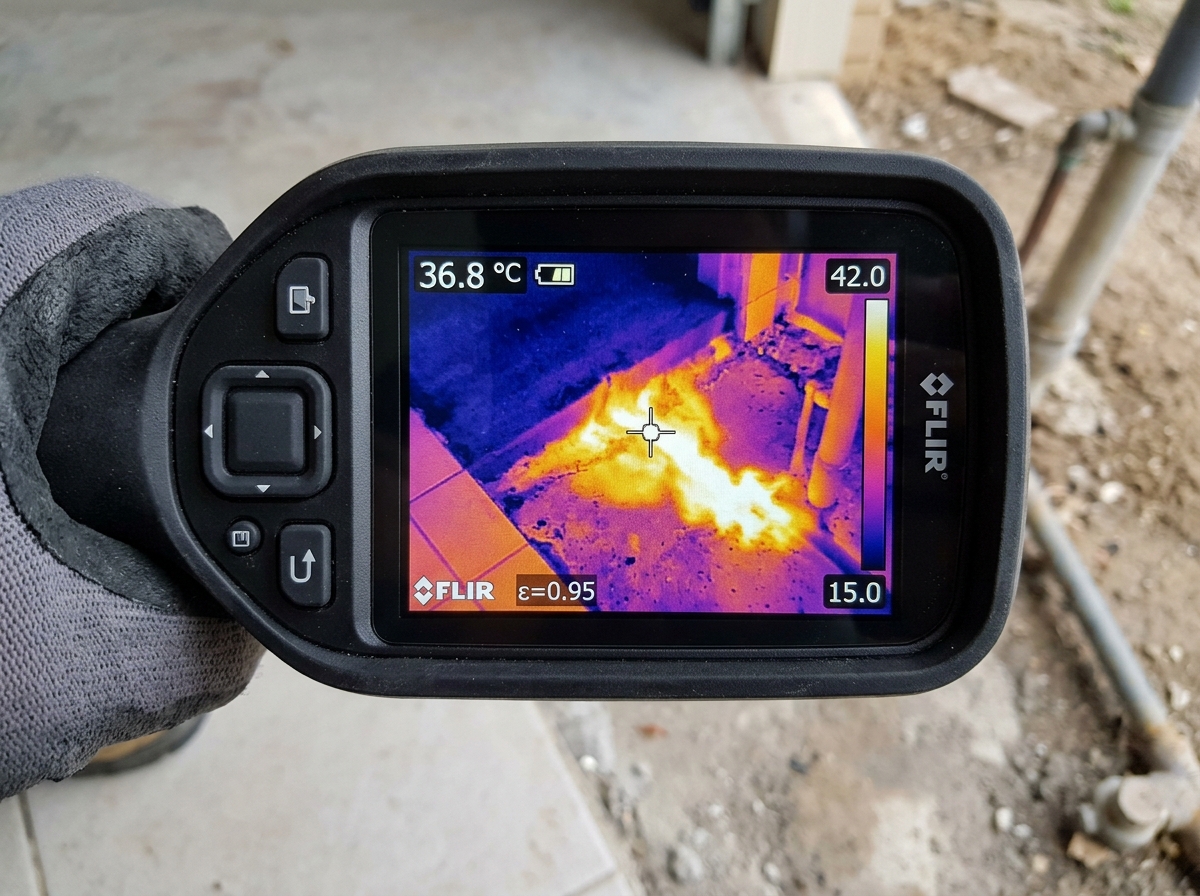
Radiometric infrared thermal camera revealing a hot water slab leak plume beneath ceramic flooring.
Why Hot Water Slab Lines Fail First in Florida
In concrete foundation homes throughout Southwest Florida, domestic hot water supply lines fail at more than triple the rate of cold water lines. When copper lines are embedded directly within dense masonry aggregates or coarse sub-slab sand, they undergo continuous thermodynamic cycling.
Every time a dishwasher runs, a shower is taken, or hot water is drawn at a vanity sink, the buried copper expands significantly lengthwise. As the pipe cools, it contracts back into its resting position. This endless mechanical expansion and contraction causes the outer copper wall to rub against jagged gravel, shell fragments, and sharp concrete grains. Over years, this abrasive friction wears the metal paper-thin until a high-velocity pinhole rupture breaks through, releasing scalding water under your living area.
Our foundation plumbing team specializes in hot water slab leak repair North Port homeowners rely on to stop this thermal destruction before floor joists, baseboards, or sub-base earth is washed away.
Classic Warning Signs of a Hot-Side Leak
Hot water slab leaks present distinct physical symptoms that distinguish them from standard cold line failures:
- Warm Spot on Floor: An unmistakable warm spot on floor North Port homeowners discover while walking barefoot across tile, vinyl, or carpet.
- Water Heater Running Constantly: Your electric or gas water heater running constantly North Port property owners notice buzzing, heating elements clicking, or burner exhaust venting 24 hours a day.
- Depleted Hot Water Capacity: Showers run lukewarm or turn cold rapidly because heated water is continually draining into the ground under the slab.
- Spiking Electric or Gas Bills: A dramatic surge in energy bills resulting from the water heater heating hundreds of gallons of escaping water daily.
- Hissing Water Heater Lines: A persistent hissing sound near the water heater expansion tank or cold-water intake pipe even when all faucets are closed.
How Hot Water Slab Leaks are Found with Thermal Imaging
Finding a hot water line leak under slab North Port homes experience is exceptionally well-suited for non-invasive radiometric infrared thermography. Because escaping domestic hot water is typically between 120 and 130 degrees Fahrenheit, the heat quickly conducts upward through several inches of dense concrete slab, mastic, and finished floor coverings.
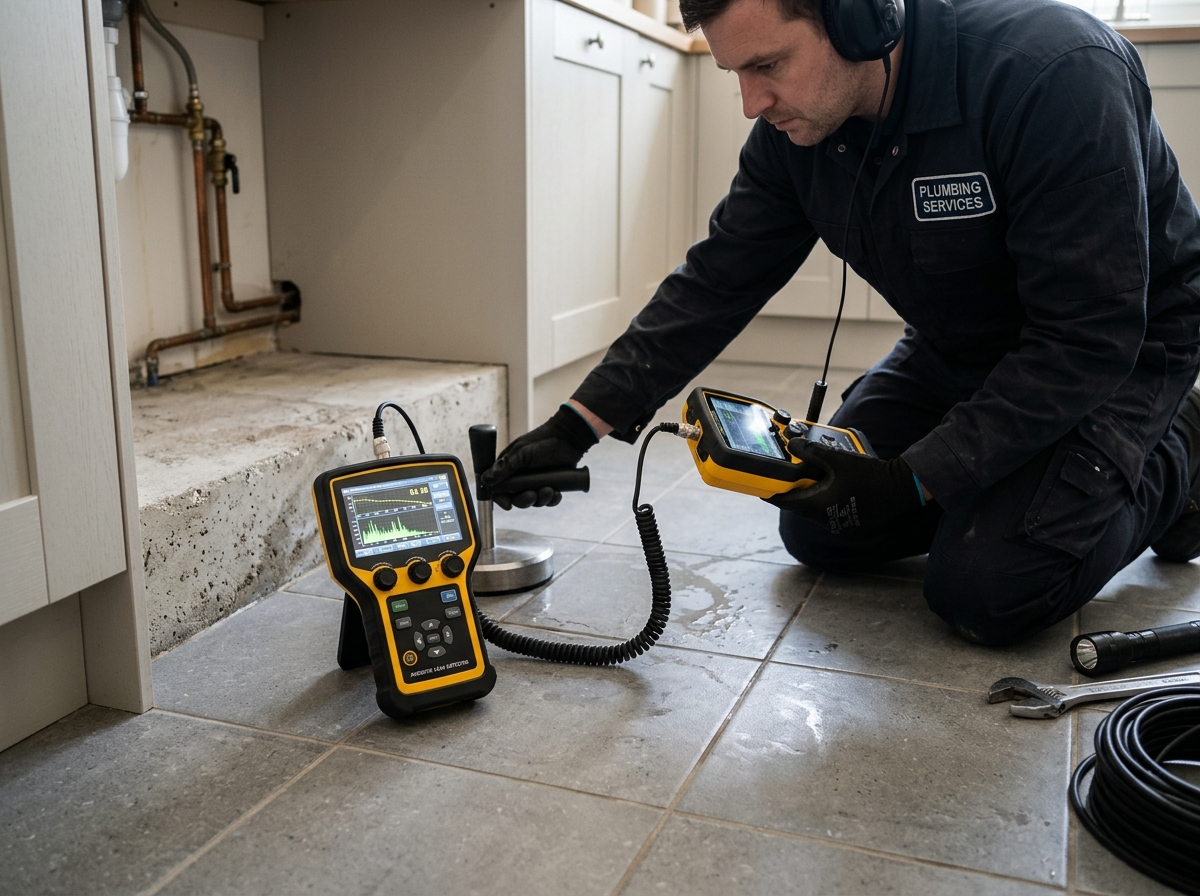
Using calibrated infrared thermal imaging cameras, our diagnostic plumbers survey the entire floor surface. Escaping hot water displays as an unmistakable brilliant radiant plume, clearly distinguishing the pressurized origin point from standard radiant room temperatures. When combined with sub-surface electronic acoustic listening discs, this allows us to confirm the exact pipe coordinate with zero invasive exploratory demolition.
If you suspect an active under-slab rupture, learn more about our comprehensive slab leak detection in North Port protocols.
Hot Side Repair vs. Overhead Reroute
Once a hot line rupture is confirmed under the slab, homeowners face a critical decision regarding how to remediate the compromised plumbing run:
Direct Concrete Spot Repair
Spot repair entails cutting out a section of your finished flooring, jackhammering through 4 to 6 inches of steel-reinforced concrete, excavating saturated soil, and brazing a new copper sleeve into the failed line.
When Appropriate: Newer installations under 10 years old where the surrounding copper pipe remains thick, unpitted, and structurally sound, and the leak is located in an easily restored area like a garage or laundry room.
Limitations: Demolishing the slab creates noise, dust, and potential tile matching issues. More critically, repairing one spot leaves the rest of that heat-stressed copper line buried under concrete, where adjacent pinholes frequently develop within months.
Overhead PEX Attic Reroute (Recommended)
An engineered overhead bypass cuts off the leaking hot water line at the manifold or water heater and caps it off permanently inside the wall. A continuous, flexible PEX-a barrier pipe is routed overhead through attic spaces and dropped down to the affected fixtures.
Advantages: Completely eliminates concrete demolition, jackhammer dust, and foundation structural stress. High-grade PEX tubing is immune to mineral pitting, soil corrosion, and thermal friction wear.
Explore full details on our dedicated slab leak reroute in North Port service, or consult our team regarding slab leak repair in North Port for long-term home protection.
Experienced multiple hot line leaks across your home? Consider our comprehensive whole-house repiping in North Port to permanently replace all foundation plumbing.